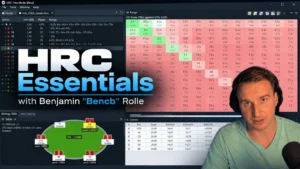
Holdem Resources Calculator
A Hold'em solver that calculates equilibrium preflop strategies factoring in ICM and chip value, helping you decide correctly at any stack size. Read full review
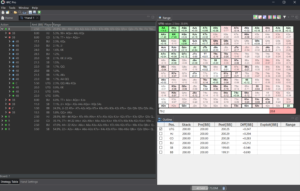
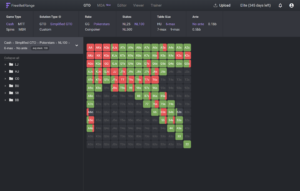
Screenshots
Pros & Cons
| Pros | Cons |
|---|---|
| Accurate ICM math | Subscription only |
| Large tournament fields | Classic limits |
| Bounty tournaments | Pro price |
| Postflop model | Heavy on RAM |
| Hand history import | |
| Free viewer mode | |
| Three operating systems |
Description
Holdem Resources Calculator (HRC for short) is a tool that calculates optimal preflop strategies for no-limit hold’em. Its main job is to show which hands are profitable to bet, call or fold in a specific spot, assuming everyone in the hand plays sensibly. The calculation covers not a single hand but every range at the table at once, so the result arrives as a finished set of charts, one for each position.
What sets it apart from a plain equity calculator is that it treats chips and money as two different things in a tournament. Several equity models are supported: a straight chip count, classic ICM, a dedicated mode for multi-table tournaments with fields running into the thousands, and FGS, a model that looks a few hands into the future. Bounty tournaments are covered separately, both KO and PKO, along with the rewards paid for knocking players out.
Calculations are not limited to preflop. The postflop model exists so HRC can judge how well a hand actually plays out after the flop and build the preflop strategy with that in mind. The higher tier also unlocks standalone postflop calculations from a chosen board, plus scripted tree building for non-standard problems.
For reviewing one’s own play there is a hand history import — from files, from the clipboard, or straight from PokerTracker 4 and Holdem Manager 3 databases. The software flags hands where the decision made at the table differs from the equilibrium one, which turns an ordinary session into a ready-made list of study topics. Saved calculations open in a free viewer mode with no licence required, which makes sharing solutions with a coach or study partners easy.
HRC runs on 64-bit Windows 10 and newer, macOS and Linux, and the speed and depth of calculations are limited mainly by available RAM and CPU core count. It is built as a working tool rather than a reference book of ready-made charts, so the first stretch of time goes into learning the settings — after which it covers almost the entire range of tournament problems, from push/fold on short stacks to complex multiway pots.
Pricing
-
Free trial: 14 days on the HRC Classic tier, no payment details required
-
HRC Classic, monthly — $16.66 per month
-
HRC Classic, three months — $39.99 per period, which works out to $13.33 per month
-
HRC Classic, annual — $119.90 per period, which works out to $9.99 per month
-
HRC Classic, one-year key without auto-renewal — $119.90
-
HRC Pro, monthly — $49.99 per month
-
HRC Pro, three months — $119.97 per period, which works out to $39.99 per month
-
HRC Pro, annual — $359.90 per period, which works out to $29.99 per month
-
HRC Pro, one-year key without auto-renewal — $359.90
The Classic tier is aimed at short and medium stacks: it suits spots up to roughly 30 big blinds, the game tree is capped at 50,000 nodes, and the accuracy of the postflop model is fixed at 256 buckets. The Pro tier removes the tree size cap (the only remaining limit is RAM), raises postflop accuracy to 16,384 buckets, and adds standalone postflop calculations, scripted tree building and the option to add new actions to a hand that has already been created. Upgrading from Classic to Pro is possible at any time, and the unused remainder of the paid period is credited towards it.